

Last Updated: November 15, 2026
Quick Summary
Choose a vitamin premix by matching it to your animal's class, the forage it eats, and the minerals it already gets, then compare labels on delivered nutrient amount rather than front-of-bag claims. Start by reading the feeding rate, guaranteed analysis and mineral form to calculate what each product actually supplies per head per day.
- Mineral and vitamin needs shift with the animal's class and stage of development.
- Read the forage and ration before reading the premix label.
- Compare products on delivered nutrient amount: guaranteed level multiplied by daily intake.
- Total up every mineral source, since overlapping products can cause imbalance.
- Recheck totals whenever you change hay, premix, supplements or grain mix.
Table of Contents
- Why Premix Choice Matters More Than the Label Suggests
- Show Cattle Vitamin and Mineral Requirements by Animal Class
- Reading the Forage and Ration Before You Buy
- How to Read Cattle Feed Labels and Compare Premixes
- Building a Show Steer Feeding Chart Around Your Premix
- Managing Cattle Mineral Intake and Watching for Imbalance
- Choosing Your Premix and Setting Up Your Feeding Program
- Frequently Asked Questions
Why Premix Choice Matters More Than the Label Suggests
A premix that looks strong on the front of the bag can still be the wrong pick for your steer. Supplementation has to account for the animal's class, the forage it grazes, and the minerals and vitamins it already gets from other feeds. Mineral and Vitamin Nutrition for Beef Cattle, Mississippi State University Extension
Many free-choice mineral and vitamin mixes are designed around a specific daily consumption rate per head. Those rates matter, because a product sized for one intake level will deliver a very different nutrient amount if your steer eats more or less. Check the directions before you assume the bag is the whole story.
Show Cattle Vitamin and Mineral Requirements by Animal Class
Vitamin and mineral needs shift with the animal's class and stage of development. A growing steer on a show program has different demands than a mature animal held at maintenance, so a single generic vitamin premix rarely fits every animal in your barn.
Start by identifying where each animal sits in its program. Note its age, its weight target and how hard it is being fed. Those three details will tell you whether you need a complete daily premix or a lighter supplement to fill a specific gap.
Watch out: Do not assume more is better. Stacking a premix on top of a mineral that already supplies the same nutrients can push intake past what the animal needs.
Reading the Forage and Ration Before You Buy
Forage is the foundation of the ration, so read it before you read the premix label. Forages tend to contain more calcium than phosphorus, so check the calcium-to-phosphorus balance against your own hay or pasture. Formulation Considerations for Mineral and Vitamin Supplements, University of Nebraska-Lincoln Extension
Take a quick inventory of what your steer eats each day: hay, pasture, grain, and any existing mineral. Then compare that inventory against the premix you are considering. The goal is to fill real gaps, not duplicate what the forage already supplies.
How to Read Cattle Feed Labels and Compare Premixes
Feed labels list guaranteed analysis, inclusion rates and feeding directions. Compare products on those specifics, not on marketing language. Two premixes can look similar on the front and deliver very different nutrient amounts per head per day. The guaranteed analysis is a legal statement of minimum or maximum content, not a promise about what the animal absorbs, so treat it as the starting point for comparison rather than the finish line.
Read the label in this order:
- Product type. Confirm whether the product is a premix, a mineral, a supplement, or a fortified feed. A premix is typically mixed into a complete ration at a low inclusion rate, while a free-choice mineral is offered loose or block form and consumed at will. The type determines how you calculate intake.
- Guaranteed analysis. Note the guaranteed levels of vitamins and trace minerals, plus calcium, phosphorus, salt and any other declared nutrients. Pay attention to whether values are minimums or maximums; a maximum on a nutrient such as salt or selenium changes how you use the product.
- Feeding directions and inclusion rate. Find the recommended daily amount per head or the pounds per ton of complete feed. This is the number that converts concentration into delivered nutrient.
- Mineral form. Look for whether trace minerals are supplied as oxides, sulfates, or proteinated/chelated sources. Form affects availability, and it is one reason two products with identical guaranteed levels can perform differently.
- Drug and additive statements. Check for medicated claims, ionophore inclusion, or other additives that interact with your ration and show rules.
Use this quick checklist when comparing options:
- Guaranteed levels of vitamins and trace minerals
- Calcium and phosphorus content, and the ratio between them
- Recommended daily feeding rate for your animal's class
- Form of the minerals, such as proteinated or chelated trace minerals
- Whether the product is a premix, a mineral, or a fortified feed
- Salt content and any maximum guaranteed levels
- Selenium source and level, since selenium is tightly regulated in feed
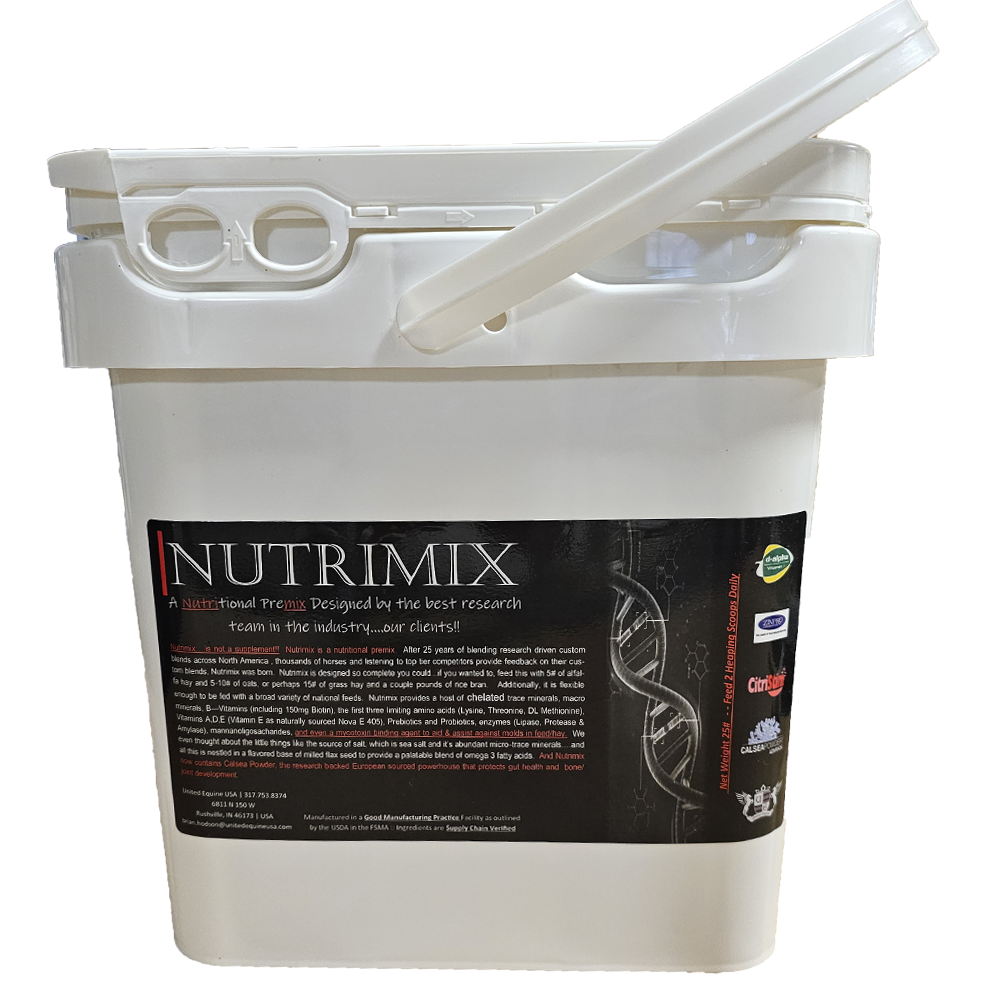
Royal Grand's NUTRIMIX is a daily vitamin and mineral premix with chelated trace minerals, amino acids, a B vitamin complex and all-natural vitamin E. Its listing also notes selenium, yeast cultures and enzymes. Compare its guaranteed analysis against your current product before switching. NUTRIMIX
Calculating Delivered Nutrient Amounts
Delivered nutrient amount is the number that actually matters. Multiply the guaranteed level by the daily intake, then compare that figure across products. A bag with a higher concentration may not deliver more if the feeding rate is lower.
Work through the math for your own animal. Write down the daily intake from the label, multiply by the guaranteed level, and record the result. Doing this for each option turns a confusing shelf of bags into a clear side-by-side comparison.
A worked example makes the method concrete. Suppose Product A guarantees 1,200 mg of a trace mineral per pound and directs 2 ounces per head per day. Two ounces is one-eighth of a pound, so the delivered amount is 1,200 ÷ 8, or 150 mg per day.
Do the same for calcium and phosphorus. If the label lists calcium and phosphorus as percentages, convert them to grams per day using the feeding rate, then check the ratio against what the forage supplies. This is where a premix that looks balanced on the bag can still be wrong for a specific hay or pasture program.
Watch out: Do not compare a per-pound guaranteed level against a per-head delivered amount, and do not assume two products with the same feeding rate deliver the same nutrients. The units and the intake rate both have to match before any comparison is valid.
The label details that matter most when comparing premixes are summarised below.
| Label item | What to check | Why it matters |
|---|---|---|
| Product type | Premix, mineral, supplement or fortified feed | Sets how intake is calculated |
| Guaranteed analysis | Vitamin and trace-mineral levels, calcium, phosphorus, salt | Shows nutrient content |
| Feeding directions | Daily amount per head or pounds per ton | Converts concentration into delivered nutrient |
| Mineral form | Oxide, sulfate, proteinated or chelated | Affects availability |
| Drug and additive statements | Medicated claims, ionophores | Interacts with ration and show rules |
| Maximum guaranteed levels | Salt and selenium limits | Changes how the product is used |
Building a Show Steer Feeding Chart Around Your Premix
A feeding chart keeps your program consistent from week to week. List each animal, its daily premix amount, its other feeds and the date you last adjusted the plan. Consistency is especially important during the show season, when routines get disrupted.
Adjust the chart as the animal changes. Weight gain, coat condition and appetite all signal whether the current program is working. When something shifts, revisit the chart rather than guessing.
Managing Cattle Mineral Intake and Watching for Imbalance
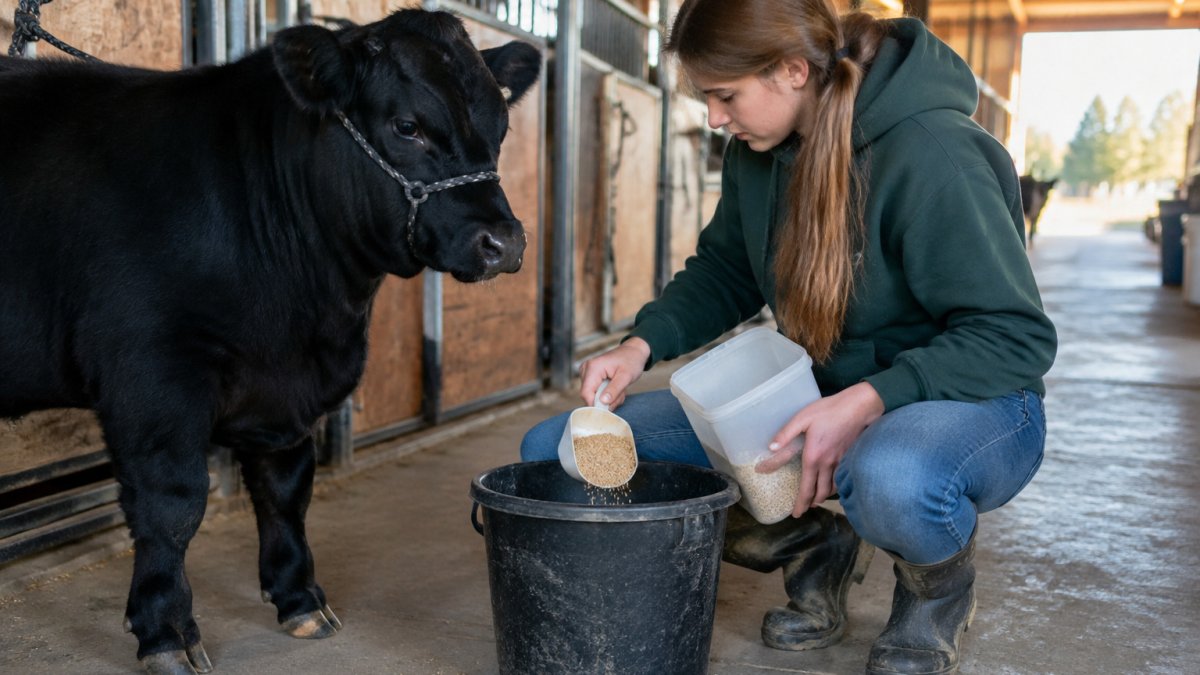
Mineral intake is easy to overshoot when several products overlap. Keep track of every source, including the premix, any free-choice mineral and fortified feed. Total intake matters more than the intake of any single product.
Build a simple total-intake worksheet for each animal. List every feed and supplement, the amount offered, and the nutrients each contributes. Add the columns to see the total delivered per day, then compare that total against the animal's requirement and against published upper limits. This is the step most programs skip, and it is where duplication shows up.
Several interactions are worth knowing before you stack products:
- Calcium and phosphorus. Excess calcium can interfere with phosphorus absorption and with trace-mineral availability. A ration that is already high in calcium from forage does not need a high-calcium mineral on top.
- Copper, zinc and iron. These trace minerals compete for absorption. Oversupplying one can pull down the others, which is why a balanced trace-mineral package usually beats a single-mineral booster.
- Selenium. Selenium is regulated in feed, and the margin between requirement and toxicity is narrow. Do not add a selenium source on top of a premix that already supplies it without checking the total.
- Salt. Salt is often used to control free-choice intake. If you change salt levels to manage consumption, you also change the intake of everything else in the mix.
- Vitamin A and vitamin D. These are fat-soluble and stored in the body. Chronic overfeeding is a real risk when multiple products supply them.
Signs of imbalance can include reduced appetite, poor performance and changes in coat or condition. More specific signs depend on the nutrient: lameness and stiffness can point to mineral imbalances, while rough coat and poor growth can point to trace-mineral shortfalls or excesses. If you see these, review your total mineral sources before adding anything else.
A practical safety routine is to recheck totals whenever you change hay, switch premix, add a new supplement, or adjust the grain mix. Each of those changes alters the total, and the premix that was correct last month may not be correct now.
Royal Grand also offers a joint support supplement for show pigs, cattle, sheep and goats, containing hyaluronic acid, glucosamine, MSM and all-natural vitamin E, which is a separate concern from the mineral program. Joint support in the show pig and show steer
Choosing Your Premix and Setting Up Your Feeding Program
Start with the animal, then the forage, then the label. Confirm the guaranteed analysis, do the delivered-amount math, and check how the premix fits with everything else the steer eats. Only then choose a product.
Royal Grand's NUTRIMIX is a daily vitamin and mineral premix, priced at $225.00 for a 20-pound container. Read more about NUTRIMIX Once you have chosen, record the feeding rate on your chart and review it as your animals progress through the season.
Frequently Asked Questions
What should a show cattle vitamin premix contain?
A useful show cattle vitamin premix should list vitamin A, D and E levels, trace minerals such as zinc, copper, manganese and selenium, and a calcium and phosphorus guarantee on the feed tag. Check the guaranteed analysis and the feeding directions together. Compare those numbers against what your forage and complete ration already supply, because a premix is meant to fill gaps rather than duplicate nutrients you are already feeding. Proteinated trace minerals are a common option when you want higher absorption, but the label should say so explicitly.
How much vitamin premix should I feed a show steer?
Follow the inclusion rate or daily intake printed on the product label, and do not guess. Many free-choice mineral and vitamin mixes are formulated for a specific daily consumption rate per head. If you are top-dressing a complete feed, weigh the premix rather than scooping by eye, and adjust only after reviewing your forage test and the animal's body condition with your county extension agent or a nutritionist.
Can I add a vitamin premix to a complete show cattle feed?
Yes, but first confirm the complete feed does not already supply the vitamins and minerals the premix provides. Doubling up on vitamin A, D or trace minerals can push intake past safe upper limits, which is why the label's feeding directions matter. Read the complete feed tag, add up the nutrient levels, and only top-dress the premix to close a documented gap. When in doubt, ask a nutritionist to review the full show ration before the season starts.
How do I know if my show cattle diet has a vitamin or mineral deficiency?
Deficiency signs can be subtle, including poor coat quality, slow gain despite adequate feed, reduced appetite, and poor reproductive performance in breeding stock. Because these signs overlap with parasites, disease and ration problems, a forage test and a veterinarian or extension specialist review are more reliable than guessing from appearance. Keep feed records so you can compare performance changes against any premix changes you make.
