

Last Updated: November 12, 2026
Quick Summary
To compare livestock supplement certificates of analysis, first match each report's lot number to the bag you bought. Then convert every result to one common basis, such as dry matter, and judge each against its own specification and the animal's needs.
- Match the lot code on the bag character-for-character to the COA before comparing anything.
- Convert as-fed and dry-matter results to one basis and record the moisture value used.
- Missing contaminant or microbial tests mean the result was not reported, not that the contaminant is absent.
- Judge results against species and life-stage needs, not against the label alone.
- Stop the purchase and request the full PDF if the lot, lab or dates are missing or unclear.
Table of Contents
- What a Certificate of Analysis Is and What It Proves
- Matching the COA Lot Number to the Product You Bought
- What a Supplement COA Should Include: Identity, Tests, and Dates
-
Step-by-Step: Comparing Two Livestock Supplement COAs Side by Side
- Step 1: Confirm each COA matches the exact lot
- Step 2: Normalize the reporting basis (as-fed vs. dry matter)
- Step 3: Align analytes, units, and methods
- Step 4: Compare each result to its own specification first
- Step 5: Score livestock-relevant benchmarks by species and life stage
- Step 6: Check contaminant and microbial coverage on both reports
- Step 7: Record lab identity, accreditation, and dates
- Step 8: Decide, document, and escalate if needed
- Livestock Supplement COA Example: A Worked Comparison
- Checking Contaminant and Microbial Testing on a Livestock Supplement
- Red Flags That Should Stop a Purchase, and Where to Get a Livestock Supplement Certificate of Analysis PDF
- Frequently Asked Questions
What a Certificate of Analysis Is and What It Proves
A certificate of analysis (COA) is a lab report that shows what is actually inside a specific batch of a supplement, and a set of livestock supplement certificates helps owners compare what their animals are really receiving.
Many feed companies publish a guaranteed analysis on the tag. That number is a promise, not a measurement. A COA is the lab's measured result for one lot, which is why it matters when you compare products.
Key points to remember:
- A COA covers one lot, not the whole product line
- It reports measured results, while the label reports guarantees
- It is only useful if you can tie it to the bag you bought
Matching the COA Lot Number to the Product You Bought
Start by finding the lot number on your bag or tub, then match it to the matching livestock supplement certificates. It is usually printed near the expiration date or on the bottom panel.
If the numbers do not match, do not assume the report applies. Ask the company which lot the report covers before you rely on it.
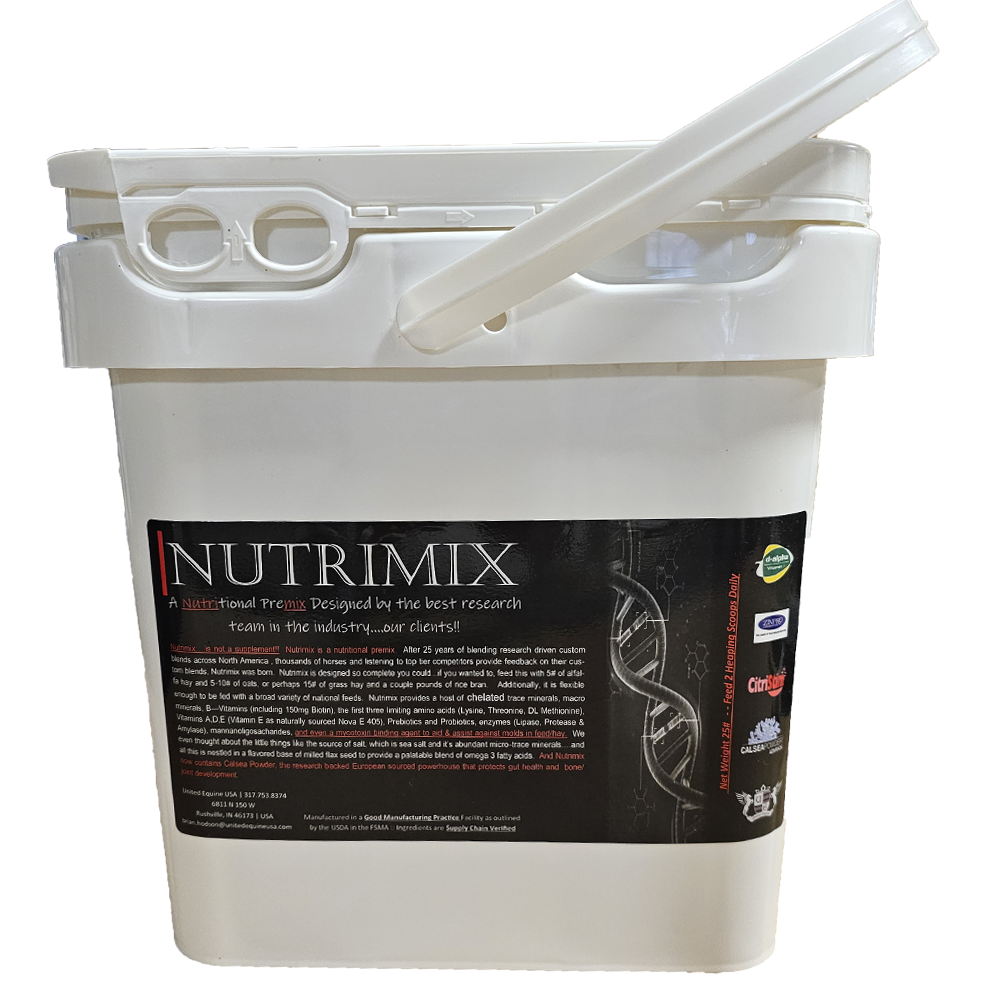
For NUTRIMIX, check the lot code on your container against the report before you compare results. The NUTRIMIX product page lists the product details you can use to confirm you have the right item.
What a Supplement COA Should Include: Identity, Tests, and Dates
A useful COA has a few core parts. Look for each one before you compare numbers:
- Product identity: the product name, lot or batch number, and sample description
- Laboratory details: the name of the testing lab and how it is accredited
- Test dates: when the sample was tested and when the report was issued
Dates matter. A report issued long before your bag was packaged may not reflect the current lot. Units matter too. A result in percent and a result in parts per million are not directly comparable without conversion.
Step-by-Step: Comparing Two Livestock Supplement COAs Side by Side
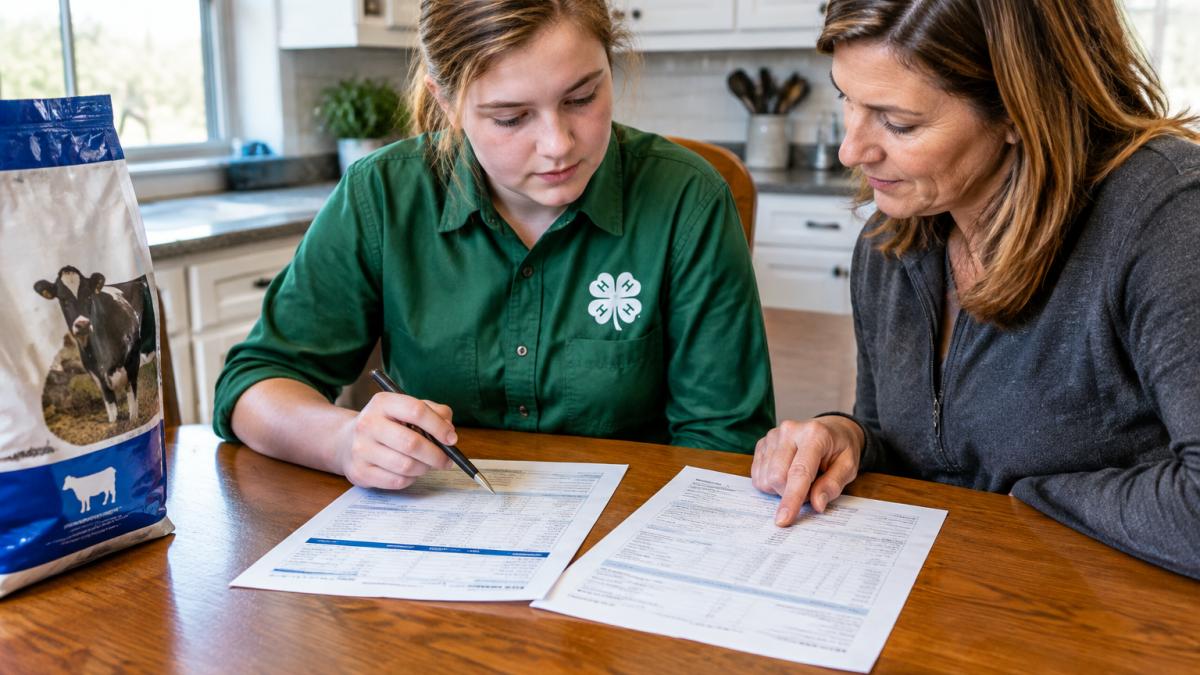
Most COA guides stop at "read the report." For livestock supplements, the harder job is comparing two reports fairly when the products, labs, and reporting bases differ. Use the workflow below as a repeatable template so every comparison is apples-to-apples.
Step 1: Confirm each COA matches the exact lot
Pull the lot or batch code from the bag, tub, or tag, usually printed near the expiration date or on the bottom panel. Match it character-for-character to the COA. A COA for lot A does not describe lot B, even if the product name is identical. If the lot on the bag is not on the report, stop and request the correct report before comparing anything.
Step 2: Normalize the reporting basis (as-fed vs. dry matter)
This is the step most comparisons get wrong. A crude protein result of 24% on a dry-matter basis is not the same as 24% as-fed if the product contains 10% moisture. Convert to a common basis before you compare:
- As-fed to dry matter: divide the as-fed result by (1 − moisture fraction). Example: 22% as-fed with 10% moisture → 22 ÷ 0.90 = 24.4% dry matter.
- Dry matter to as-fed: multiply the dry-matter result by (1 − moisture fraction). Example: 24.4% dry matter × 0.90 = 22% as-fed.
Pick one basis, dry matter is usually the fairest for nutrient comparisons, and convert every result on both reports to it. Record the moisture value you used so the comparison is auditable.
Watch out: if one COA reports moisture and the other does not, you cannot reliably convert between bases. Ask the company for the moisture result before you draw conclusions.
Step 3: Align analytes, units, and methods
Build a two-column worksheet with one row per analyte. For each row, record:
- The analyte name exactly as written on each COA (crude protein, acid detergent fiber, calcium, phosphorus, zinc, vitamin E, aflatoxin B1, etc.)
- The reported unit (%, ppm, IU/lb, CFU/g, ppb)
- The analytical method (for example, AOAC method numbers or a named procedure such as Kjeldahl for nitrogen or inductively coupled plasma for minerals)
If the two COAs use different units for the same analyte, convert to a common unit before comparing. Percent and ppm convert cleanly (1% = 10,000 ppm); IU and mg do not, so note the mismatch rather than forcing a conversion.
Step 4: Compare each result to its own specification first
A COA is a pass/fail document against the manufacturer's specification, not a beauty contest between brands. For a deeper look at how this business approaches quality and testing, see our news article on quality testing. For each report, mark whether the measured result falls inside, at the edge of, or outside its stated acceptance range. A product that barely meets a wide specification may be weaker than one that comfortably meets a tight specification, even if the raw number looks higher.
Step 5: Score livestock-relevant benchmarks by species and life stage
This is where a livestock comparison diverges from a human-supplement comparison. Judge the numbers against the animal, not against a generic label:
- Crude protein and amino acids: compare against the requirement for the species and production stage (for example, a growing calf versus a dry cow versus a lactating doe). A supplement that looks adequate for maintenance may be short for growth or lactation.
- Fiber fractions (acid detergent fiber and neutral detergent fiber): high fiber dilutes nutrient density; compare fiber alongside protein and energy rather than in isolation.
- Macrominerals (calcium, phosphorus, magnesium, potassium, sulfur) and their ratios: the calcium-to-phosphorus ratio matters as much as the absolute amounts.
A supplement can pass every specification and still be a poor fit for a given ration, because the COA does not know what else the animal eats. Use the COA to compare products; use the ration and a nutritionist to decide fit.
Step 6: Check contaminant and microbial coverage on both reports
List which contaminant tests appear on each COA, mycotoxins (aflatoxin, deoxynivalenol, zearalenone, fumonisin), heavy metals (lead, arsenic, cadmium, mercury), and microbial indicators (Salmonella, E. coli, total plate count). A report that omits a test is not proof the contaminant is absent; it means the test was not reported. Note the gap explicitly in your worksheet.
Step 7: Record lab identity, accreditation, and dates
For each report, capture the laboratory name, any accreditation reference (for example, an ISO/IEC 17025 accreditation), the sample receipt date, the test date, and the report issue date. A report issued long before the bag was packaged may not describe the current lot. A report with no lab name or no dates cannot be verified.
Step 8: Decide, document, and escalate if needed
Summarize the comparison in one line per analyte and one overall recommendation: accept, question, or reject.
A simple two-column worksheet with rows for analyte, unit, basis, method, result, limit, and pass/fail will carry you through every comparison and make the decision defensible to a veterinarian or nutritionist.
The article's workflow boils down to a few repeatable steps, each with a clear action and check.
| Step | What to do | Key check |
|---|---|---|
| 1. Confirm the lot | Match the bag's lot code to the COA | Codes match character-for-character |
| 2. Normalize the basis | Convert as-fed and dry-matter results | Record the moisture value used |
| 3. Align analytes | Match names, units and methods | Convert units before comparing |
| 4. Check each spec | Judge each result against its own range | Inside, edge or outside the range |
| 5. Apply species benchmarks | Compare to species and life-stage needs | Judge by the animal, not the label |
| 6. Check contaminant tests | List mycotoxin, metal and microbe tests | Missing test means not reported |
| 7. Record lab and dates | Note accreditation, test and issue dates | Report predates or postdates the bag |
| 8. Decide and document | Accept, question or reject; keep the file | Escalate if results are out of spec |
Livestock Supplement COA Example: A Worked Comparison
A worked example makes the workflow concrete. The numbers below are illustrative, not from a specific product, but the mechanics are exactly what you would apply to two real COAs.
The setup
You are comparing two protein-mineral supplements for a growing calf ration. Both bags carry a guaranteed analysis on the tag. You have pulled the COA for the lot on each bag.
- Product A COA: crude protein 22.0% as-fed; moisture 10.0%; calcium 1.2% as-fed; phosphorus 0.8% as-fed; aflatoxin B1 "not detected" at a limit of 20 ppb; lab accredited; report dated two months before the bag was packaged.
- Product B COA: crude protein 24.5% dry matter; moisture 12.0%; calcium 1.1% dry matter; phosphorus 0.9% dry matter; no mycotoxin section; report dated one week before the bag was packaged.
Step 1: Convert both to a common basis
Use dry matter as the common basis.
- Product A crude protein: 22.0 ÷ (1 − 0.10) = 24.4% dry matter.
- Product A calcium: 1.2 ÷ 0.90 = 1.33% dry matter.
- Product A phosphorus: 0.8 ÷ 0.90 = 0.89% dry matter.
After conversion, the crude protein values are 24.4% (A) versus 24.5% (B), essentially a tie, not the 2.5-point gap the raw numbers suggested.
Step 2: Compare each result to its own specification
Check each COA against the manufacturer's stated acceptance range. Suppose Product A's specification for crude protein is 21.0-23.0% as-fed and the measured value is 22.0%, inside the range. Suppose Product B's specification is 24.0-25.0% dry matter and the measured value is 24.5%, also inside. Both pass; neither is disqualified on protein.
Step 3: Apply livestock-relevant judgment
- Calcium-to-phosphorus ratio: Product A is 1.33 ÷ 0.89 ≈ 1.5:1; Product B is 1.1 ÷ 0.9 ≈ 1.2:1. Both are within common ranges for cattle, but the ratio, not just the absolute calcium, is what you compare.
- Mycotoxin coverage: Product A reports aflatoxin B1 not detected at a 20 ppb limit. Product B has no mycotoxin section. That is not proof of contamination, it means the test was not reported. For a growing calf, where aflatoxin can depress intake and growth, the missing test is a real information gap.
- Report timing: Product A's report predates the bag by two months; Product B's report is one week old. A current report is more likely to describe the lot in your hand, though neither is automatically invalid.
Step 4: Make the call
On protein and minerals, the two products are close after basis conversion. The decision turns on the contaminant coverage and report timing: Product A gives you a mycotoxin result but an older report; Product B gives you a current report but no mycotoxin data. A reasonable next step is to request Product B's mycotoxin results and Product A's most recent lot report before choosing.
Watch out: do not compare a dry-matter result from one COA to an as-fed result from another and conclude one product is stronger. That single mistake flips more comparisons than any other, and it is invisible unless you write the basis next to every number.
The lesson from the example is not which product wins, it is that basis conversion, specification checks, and livestock-specific judgment each change the answer. Run every comparison through all three before you buy.
Checking Contaminant and Microbial Testing on a Livestock Supplement
Not every COA covers contaminants or microbes. When it does, look for heavy metals, mycotoxins, and microbial counts such as pathogens. Confirm the reported limits match what the product claims.
If a COA has no contaminant or microbial section, ask the company whether that testing was done. You can find Cattle Products to review the supplement documentation available for each item.
Red Flags That Should Stop a Purchase, and Where to Get a Livestock Supplement Certificate of Analysis PDF
Watch for these warning signs when you review a COA:
- No lot number, or a lot number that does not match the bag
- No lab name or no test dates
- Results with no units or no acceptance limits
If a report raises questions, pause the purchase and ask for the full PDF from the company. You can also check the frequently asked questions for how to request documentation.
Compare reports carefully before you buy, and keep the lot information for every supplement you use. Start with the lot number on your bag and work through each step above.
Frequently Asked Questions
What should a certificate of analysis include?
A livestock supplement certificate of analysis should identify the product and lot number, list the laboratory that performed the tests with its accreditation details, state the test methods and test dates, and report measured results against stated specifications with units. Look for both nutrient results (such as protein, calcium, phosphorus, and the trace minerals and vitamins listed in the guaranteed analysis) and contaminant results. If a document omits the lot number or the laboratory's name, treat it as incomplete and ask the supplier for a batch-specific version before comparing it to any other product.
Does a certificate of analysis prove that a livestock supplement is safe?
No. A certificate of analysis shows what a laboratory measured in the specific sample it received, on the dates listed, using the methods named. It does not guarantee that every bag in the same production run matches, and it does not replace a label review or your own judgment about withdrawal rules and feeding limits. Use the COA as one input alongside the guaranteed analysis on the label, the ingredient list, and the supplier's sampling and testing practices.
How can you tell whether a supplement COA applies to the product batch you have?
Match the lot or batch number printed on the COA to the number on your bag or container, and confirm the product name and net weight match as well. If the COA lists a generic product name with no lot number, or the lot number does not match your package, it may describe a different production run. Ask the supplier for the COA for your exact lot before relying on its results when comparing products.
Which contaminants should be checked on a livestock supplement COA?
Look for results on heavy metals such as lead, arsenic, cadmium, and mercury, along with mycotoxins and microbial counts such as Salmonella and E. coli where the product type calls for them. Each result should show a measured value, a unit, and a limit or reporting threshold. A result listed as below detection limit is different from a result listed as zero, so check how the laboratory reports non-detects before comparing two documents.
