

Table of Contents
- Understanding Show Cattle Finishing Goals
- Building a Show Steer Feeding Program
- How Long to Finish a Show Steer
- Assessing Finish and Body Condition
- Managing Show Cattle Feed Ration Adjustments
- Show Cattle Travel Health and Pre-Show Preparation
- Show-Day Countdown and Final Polish
- Frequently Asked Questions
Last Updated: October 19, 2026
Understanding Show Cattle Finishing Goals
To finish show cattle means bringing your steer to peak condition for the ring: optimal weight, muscle definition, fat cover, and presence.
Unlike commercial beef finishing, show cattle finishing prioritizes phenotype, how the animal looks and moves, over pure weight gain.
Starting 90 to 120 days before your show date gives realistic time to add condition safely without overfeeding or digestive problems.
Building a Show Steer Feeding Program
A solid feeding program combines forage, hay, and grain-based concentrates in proportions based on your steer's age, weight, target weight, and condition needs.
Most show steers do best on quality forage or pasture, good hay, and a grain-based concentrate. Concentrate drives growth and condition; forage and hay provide fiber, maintain rumen health, and control costs.
Grain-Based Rations and Concentrate Feeds
Grain-based rations typically use steam-flaked corn as the primary energy source because it's highly digestible and converts efficiently to weight and condition.
Concentrate usually makes up 50 to 70 percent of dry matter intake.
Commercial show feeds simplify balancing with consistent nutrition, but many experienced exhibitors build custom rations from steam-flaked corn, protein supplements, minerals, and vitamins.
Balancing Protein, Energy, Fat, and Minerals
Protein supports muscle development and frame growth; most finishing rations contain 12 to 14 percent crude protein.
Energy drives weight gain and condition; grain provides it in concentrated form.
Minerals, especially calcium, phosphorus, and trace minerals like zinc and copper, support bone development, immune function, and coat quality.
Fiber keeps the rumen functioning; without adequate roughage from hay and forage, digestion becomes sluggish or upset.
Forage and Hay Integration
Quality forage or pasture should be the base of your program.
Alfalfa hay is higher in protein and minerals than grass hay, making it excellent when you finish show cattle.
As you increase concentrate in the final weeks, you may reduce hay slightly to make room for extra grain and allow maximum condition buildup.
Water is often overlooked but critical: a finishing steer drinks 15 to 25 gallons daily depending on weather, feed intake, and activity.
How Long to Finish a Show Steer
The finishing period typically runs 90 to 120 days, though it can be shorter or longer depending on your steer's starting condition and genetics.
Timeline and Rate of Gain
Most show steers gain 2.5 to 3.5 pounds per day during a focused finishing program, though some reach higher and others closer to 2.
A 120-day period at 3 pounds per day means roughly 360 pounds of total gain, a 900-pound steer would reach 1,260 pounds by show day.
Record your steer's weight at the start of finishing and every two weeks thereafter.
Adjusting Timelines by Animal Size and Condition
A larger-framed steer may need more time to fill out and show proper finish, so a 600-pound and an 800-pound steer starting the same day likely need different timelines and ration adjustments.
Smaller steers often finish faster because they're closer to mature frame, while larger steers still growing into theirs may take longer to show the polish judges want.
A steer already carrying condition needs less time than one starting lean.
Assessing Finish and Body Condition
Finish is visible fat cover combined with muscling and overall balance. A finished show steer shows smooth fat cover over the ribs, loin, and rump, with visible muscling in the shoulder, arm, and hindquarters.
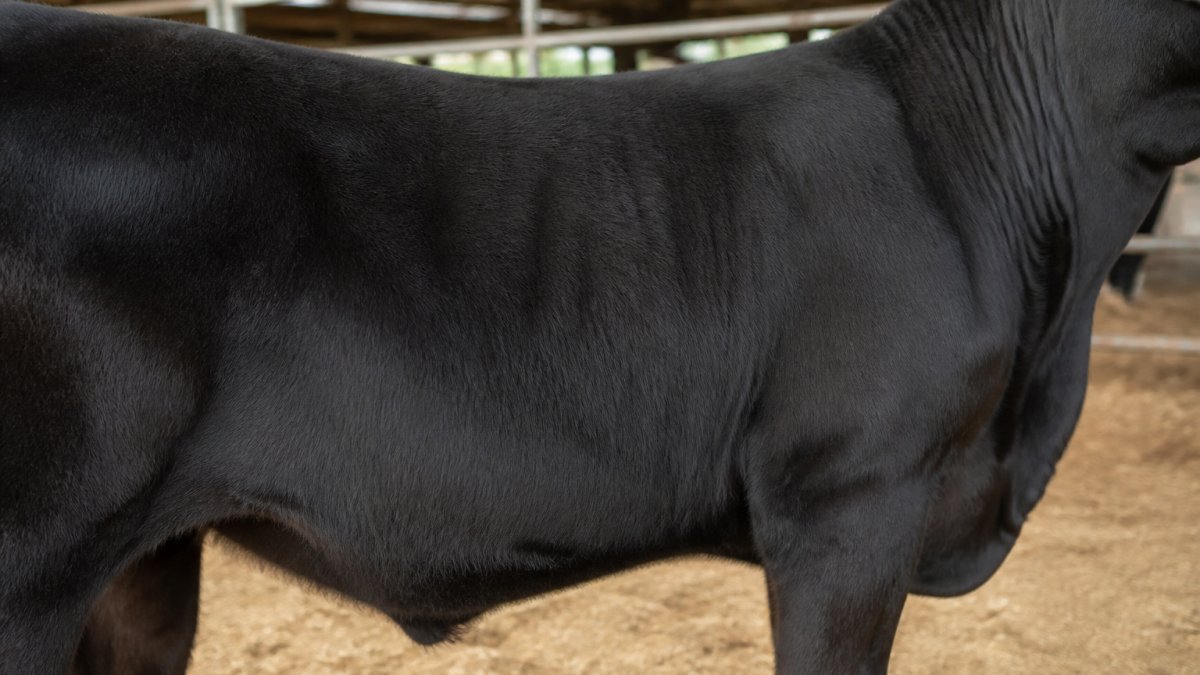
Visual Assessment of Fat Cover
The loin and back should look smooth and rounded, with no visible backbone and a gentle curve from shoulder to hip.
Fat should cover the pin bones smoothly with no sharp definition, and the rump should be rounded and full, not angular or sunken.
A common mistake is confusing a bloated steer with a finished steer.
Tracking Weight and Recording Progress
Weigh your steer every two weeks. Use a livestock scale if possible; if not, use a weight tape consistently.
Plot weights on a simple chart and look for a steady upward trend. If gain slows unexpectedly, investigate: Is the steer eating normally?
Record body condition scores alongside weights. Use a nine-point scale: 1 is emaciated, 9 is obese, and 5 to 6 is ideal for show cattle.
Managing Show Cattle Feed Ration Adjustments
Feed changes must happen gradually. Abrupt switches in feed cause digestive upset, reduced appetite, and potentially serious illness like acidosis or bloat.
Gradual Transitions and Feed Changes
When switching concentrate brands, adding grain, or introducing a supplement, make the change over 7 to 14 days: mix 75 percent old feed with 25 percent new for 3 to 4 days, then 50/50 for 3 to 4 days, then 25/75, then 100 percent new.
This lets rumen microbes adapt. Skipping it risks acidosis, reduced appetite, loose manure, or lethargy, which can be life-threatening in severe cases.
If your steer stops eating or shows signs of digestive upset, back off immediately. Return to the previous ration and try the transition again more slowly.
Adding Condition in the Final Weeks
In the final 4 to 6 weeks before your show, you may increase concentrate feeding to boost condition. This is when many exhibitors add supplements like Royal Grand's MEGA CAL liquid finisher, which combines rice bran oil and MCT oil with protein and amino acids to support final polish and fill.

Increase concentrate gradually, even in the final weeks. A common approach is to add 1 to 2 pounds of concentrate per week until you reach your target intake. Monitor your steer's appetite and manure consistency closely. If appetite drops or manure becomes too loose, ease back on the increase.
Show Cattle Travel Health and Pre-Show Preparation
Transport stress affects appetite, feed intake, and how your steer looks in the ring. Managing travel and pre-show stress is as important as your feeding program.
Managing Appetite and Stress During Transport
Travel stress, loading, hauling, new surroundings, mixing with unfamiliar cattle, can suppress appetite for 24 to 48 hours.
Minimize stress by loading and transporting calmly, avoiding loud noises, excessive handling, or aggressive mixing.
Familiar hay and water help. Bring hay from home if possible; the familiar smell and taste encourage eating.
Some exhibitors use electrolyte supplements or probiotics during transport to support digestive health.
Feed Safety and Digestive Health Risks
Feed quality matters more under stress. Moldy hay, contaminated grain, or poor-quality water can trigger digestive upset when your steer is already stressed from travel.
Inspect all feed first.
Never introduce new feed at the fairgrounds. Stick with what your steer knows. Save any ration changes for after the show.
Monitor your steer's manure daily. Normal manure is firm and well-formed.
Show-Day Countdown and Final Polish
The final 48 hours before the show ring require careful management to present your steer at peak condition.
48 Hours Before the Show Ring
Two days before your show, begin tapering feed slightly. Reduce concentrate by 10 to 15 percent to prevent bloat and allow your steer's rumen to settle.
Increase water intake. A well-hydrated steer looks fuller and more polished. Offer water frequently and ensure it's clean and cool.
If you're using a show-day supplement like Royal Grand's MILKSHAKE pre-show product, begin feeding it 48 hours before the ring as directed.

Groom thoroughly. Use a quality shampoo like Royal Grand Shampoo, which hydrates and strengthens hair coat while providing a protective barrier against bacteria. After washing, apply Royal Grand Day Spray to maintain coat quality and shine between washings.

Daily Management Checklist
| Task | Timing | Purpose |
|---|---|---|
| Weigh and record | Every 2 weeks | Track rate of gain and progress |
| Assess body condition | Every 2 weeks | Visual confirmation of finish development |
| Offer fresh water | Multiple times daily | Maintain hydration and appetite |
| Feed forage/hay | Twice daily | Maintain rumen health and fiber intake |
| Feed concentrate | Twice daily (or as planned) | Drive weight gain and condition |
| Check manure quality | Daily | Early warning of digestive issues |
| Observe appetite | Daily | Detect stress or illness early |
| Groom and handle | 2-3 times weekly | Maintain coat quality and habituation |
| Record any changes | As they occur | Track what affects your steer's progress |
Finishing show cattle successfully combines smart feeding, careful monitoring, and stress management. The foundation is a balanced ration that matches your steer's genetics, frame, and current condition. At Royal Grand, we understand that a polished finish requires more than just feed, it requires nutritional support that fortifies frame, enhances connective tissue, and maintains joint soundness under the stress of training and transport. Our supplements like MEGA CAL and MILKSHAKE are formulated specifically for showstock to support the muscle definition, hydration, and visual polish that separate winners in the ring.
Frequently Asked Questions
How long does it take to finish a show steer?
Finishing a show steer typically takes 90 to 150 days, depending on the animal's starting weight, age, and target show date. Younger steers with lighter frames may need 120-150 days, while more mature animals can finish in 90-120 days. Rate of gain during this period should average 2.5 to 3.5 pounds per day on a proper grain-based ration. Work backward from your show date to determine when to start the finishing program.
What should you feed a show steer to help it finish?
A show cattle feed ration should combine grain-based concentrate feed with quality forage. Steam-flaked corn is a popular grain choice, paired with protein sources like alfalfa hay or commercial protein supplements. Aim for 12-14% crude protein and balance energy, fat, fiber, and essential minerals. Many exhibitors use commercial show feed formulated specifically for cattle. Supplements like MEGA CAL provide additional calories and finishing support during the final weeks before the show.
How can you tell when a show steer is finished?
A finished show steer displays visible fat cover along the ribs, back, and shoulders, with a smooth, uniform appearance. Handle the animal to feel the rib structure, you should feel some fat over the ribs but still detect individual bones. The steer's weight should match breed and age targets, and body condition should score 7-8 on a 1-9 scale. Visual polish, muscle definition, and hair quality also indicate proper finish. Record weights weekly to track rate of gain and confirm the animal is on target.
How do you keep show cattle healthy during travel to shows?
Maintain consistent feed and water availability before, during, and after transport to prevent digestive upset. Gradual feed changes at least 2-3 weeks before travel help the rumen adapt. Manage heat stress by providing shade, adequate water, and electrolytes. Keep the animal's stress low by minimizing handling changes and maintaining familiar feeding routines. Watch for signs of appetite loss or digestive problems, which can indicate travel-related stress. Ensure proper ventilation in trailers and avoid overcrowding.
What is the best show steer feeding program timeline?
Start your show steer feeding program 120-150 days before the show date. Begin with a maintenance ration, then gradually increase grain and concentrate over 2-3 weeks to avoid digestive upset. Maintain consistent daily feeding schedules and monitor weight gain weekly. In the final 2-3 weeks, adjust the ration to add condition and polish. Use show-day prep products like MILKSHAKE starting 48 hours before the show to enhance fill and appearance. Document all feed changes and weight records to fine-tune your program for future animals.
Does show cattle finishing differ from commercial beef finishing?
Yes. Show cattle finishing prioritizes visual appearance, muscle definition, and optimal body condition score over rapid weight gain. Show programs emphasize frame size, polish, and hair quality, requiring careful ration balancing and frequent assessment. Commercial finishing focuses on feed efficiency and pounds of gain. Show cattle may finish at lighter weights and require more frequent monitoring and adjustment. The finishing period is also timed to peak condition on a specific show date, whereas commercial cattle are finished for processing efficiency.
When should I adjust my show steer's feed before a show?
Begin major feed adjustments 2-3 weeks before the show to allow the rumen to adapt without digestive upset. In the final 2 weeks, gradually increase energy and fat to add condition and improve appearance. Use show-day products like MILKSHAKE 48 hours before competition to enhance fill, hydration, and muscle definition. Avoid sudden ration changes within 7 days of the show, as these can cause digestive problems or upset the animal's appearance. Document what works for your animal to refine your approach for future shows.