

Table of Contents
- Why Verifying Livestock Supplement Quality Matters for Show Animals
- Reading and Understanding Livestock Supplement Label Requirements
- Verifying Ingredient Identity and Sourcing
- Understanding Third-Party Testing for Animal Supplements
- Interpreting a Livestock Supplement Certificate of Analysis
- How to Compare Livestock Supplements Effectively
- On-Farm Receiving, Storage, and Handling Checklist
- Regulatory Compliance and Documentation Tracking
- Frequently Asked Questions
Last Updated: October 18, 2026
Why Verifying Livestock Supplement Quality Matters for Show Animals
Buying supplements for show animals is not a small decision, which is why you need to verify livestock supplement quality. The right product can support joint soundness, frame development, and overall finish. The wrong one wastes money and delivers nothing.
Show animals face intense physical demands. They travel to competitions, stand for hours under stress, and require optimal nutrition to perform. This is where supplement quality becomes critical.
At Royal Grand, we understand that show exhibitors need products they can trust. Verifying livestock supplement quality protects your investment and ensures your animals get what you're paying for. This guide walks you through the exact steps to evaluate supplements before you buy.
Reading and Understanding Livestock Supplement Label Requirements
What the Label Must Contain
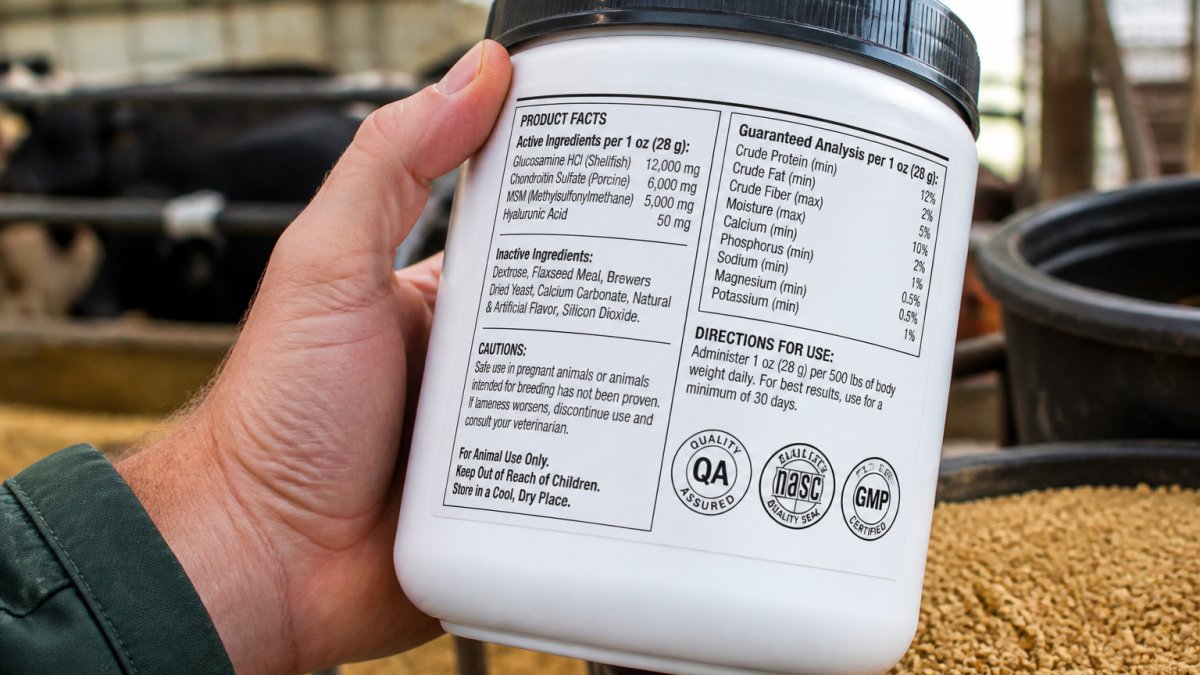
Every livestock supplement label must include specific information by law. Understanding what's required helps you spot legitimate products from questionable ones.
A complete label shows the product name, guaranteed analysis, ingredient list, directions for use, and manufacturer information.
The ingredient list must identify each component by its common name. Manufacturers must list ingredients in descending order by weight.
Look for the manufacturer's name and address. A legitimate company stands behind its product with clear contact information. Vague labeling or missing details are red flags.
Identifying Red Flags on Product Labels
Some labels hide problems behind vague language or incomplete information. Learn to spot these warning signs.
Avoid products that list "feed ingredients" without specifics. Phrases like "plant protein blend" or "mineral complex" tell you nothing about what's actually inside. Legitimate products name their ingredients clearly.
Missing batch numbers or expiration dates suggest poor quality control. You cannot track the product or know if it's fresh. Reputable manufacturers always include these details.
Exaggerated claims without supporting evidence are another concern. Honest companies make realistic claims backed by evidence.
Verifying Ingredient Identity and Sourcing
Checking the Full Ingredient List
The ingredient list is your first defense against poor-quality supplements. Each ingredient should be identified specifically, not grouped into vague categories.
Read every ingredient name carefully. Instead of "vitamin E," quality products specify "all-natural vitamin E" or list the exact form.
Look for ingredient consistency. If you see the same product sold at different retailers but with different ingredient lists, something is wrong. Consistent formulations across batches show proper quality control.
Check the ingredient order. Ingredients listed first make up the largest portion. If your supplement is supposed to provide joint support but joint-support ingredients appear near the end of the list, you're not getting enough of what matters.
Asking Manufacturers About Sourcing
Do not hesitate to contact the manufacturer directly. Legitimate companies welcome questions about their products and sourcing practices.
To verify livestock supplement quality, ask where each major ingredient comes from. Reputable suppliers can tell you whether glucosamine comes from shellfish or plant sources, whether hyaluronic acid is fermented or synthetic, and whether vitamin E is from natural sources or lab-produced.
Request information about their supplier relationships. Do they work with the same suppliers consistently, or do they switch sources frequently? Consistent suppliers indicate stability and quality control.
Ask about any testing they conduct on raw ingredients before they blend the final product. Quality manufacturers test incoming materials to verify they match specifications and are free from contaminants.
Understanding Third-Party Testing for Animal Supplements
What Third-Party Testing Covers
Third-party testing means an independent lab, not the manufacturer, tests the product. This removes bias and provides credible verification.
Quality testing checks whether the product contains what the label claims. A supplement claiming to have 500 mg of glucosamine per serving gets tested to confirm it actually delivers that amount. Testing also checks for consistency across batches.
Many labs test for contaminants like heavy metals, microbial growth, and unwanted additives. These tests protect your animals from harmful substances that might slip into poorly controlled manufacturing.
Stability testing evaluates whether the product maintains its quality over time. A supplement that degrades quickly becomes less effective. Testing shows how long the product remains potent under normal storage conditions.
Recognizing Legitimate Testing Organizations
Not all testing organizations carry equal weight. Some labs are rigorous and independent. Others lack real standards.
Look for labs accredited by recognized bodies. The U.S. Pharmacopeia (USP) and NSF International are well-known for rigorous testing standards. Products bearing their seals have passed independent verification.
Be cautious of in-house testing that the manufacturer conducts themselves. While not necessarily dishonest, it lacks the credibility of truly independent labs. Always prefer third-party testing when available.
Ask the manufacturer which lab tested their product. A legitimate company names their testing partner and provides documentation. If they refuse to name the lab or provide results, they likely did not conduct real testing.
Interpreting a Livestock Supplement Certificate of Analysis
Key Data Points on a Certificate of Analysis
A certificate of analysis (COA) is the lab's official report showing what they found in the product. Learning to read it protects you from false claims.
The COA shows the date tested and the lab that conducted the test. It lists each nutrient tested and the actual amount found. Compare these numbers to the label's guaranteed analysis.
The COA also shows the batch number and product name. This confirms the test applies to the exact product you're considering, not a different formulation.
Look for the testing method used. Labs use standardized methods recognized by industry bodies.
Verifying Certification Claims With the Certifying Organization
Never trust a COA without confirming it's real. Manufacturers can fabricate documents, so verify directly with the testing lab.
Contact the lab listed on the certificate. Provide the batch number and product name, and ask them to confirm they tested that exact product. Legitimate labs maintain records and can verify their reports instantly.
Ask the lab to describe their testing standards and accreditation. They should explain which recognized bodies oversee their work.
Request information about their quality assurance process. How do they prevent contamination during testing? How often do they calibrate their equipment? These details show whether they operate to real standards.
How to Compare Livestock Supplements Effectively
Matching Supplements to Species and Production Stage
Not all supplements work equally for every animal. Species differences and production stages matter enormously.
Cattle, pigs, sheep, and goats have different nutritional needs. A supplement formulated for cattle joint support might not deliver the right mineral ratios for goats. Always check that the product label identifies your specific species.
Production stage also changes requirements. A growing pig needs different support than a finished show pig. A breeding animal has different demands than one being prepared for sale.
Ask the manufacturer whether their product works across multiple species or targets specific ones. Products designed for specific species show the manufacturer understands their unique needs. Generic "livestock supplements" often fail to optimize for any single species.
Evaluating Absorption and Assimilation Claims
Many supplements claim superior absorption. These claims matter only if they're backed by real evidence.
Absorption refers to how well the animal's digestive system takes in the nutrient. Assimilation means how well the body uses it once absorbed.
Ask the manufacturer what evidence supports their absorption claims. Vague claims without supporting evidence should make you skeptical.
Compare ingredient forms. Chelated minerals and proteinated trace minerals are more absorbable than basic mineral salts. Specific vitamin forms matter too. These details in the ingredient list tell you whether the product is engineered for absorption or just assembled from cheap ingredients.
On-Farm Receiving, Storage, and Handling Checklist
Proper storage preserves supplement quality from purchase through use. Poor handling destroys the value of even the best product.
Receiving and inspection:
- Verify the product matches your order (name, quantity, batch number)
- Check the expiration date and confirm it's at least 6 months away
- Inspect the container for damage, leaks, or signs of moisture
- Confirm the label matches the certificate of analysis
Storage conditions:
- Store in a cool, dry location away from direct sunlight
- Keep away from high heat or humidity, which degrade nutrients
- Separate supplements from pesticides, medications, and other chemicals
- Use airtight containers to prevent moisture absorption
- Maintain storage temperature between 50-75°F if possible
Handling during use:
- Use clean scoops and measuring tools, never double-dip or use contaminated utensils
- Return the container lid to seal it immediately after each use
- Check for clumping, discoloration, or odor changes before each use
- Discard any product that shows signs of contamination or age
- Track which batch you're using and when it was opened
Documentation:
- Keep records of purchase date, batch number, and expiration date
- Note which animals received the supplement and when
- Record any observed changes in animal condition or performance
- Save the certificate of analysis with your records
Regulatory Compliance and Documentation Tracking
Understanding the regulatory landscape protects you and ensures your animals receive compliant products.
Livestock supplements fall under FDA oversight as feed additives (the FDA). Manufacturers must follow specific rules about ingredient sourcing, labeling, and safety testing.
Organic livestock operations face additional requirements. If you manage certified organic animals, your supplements must meet organic feed standards.
Keep documentation for every supplement purchase. Save the label, certificate of analysis, batch number, and manufacturer contact information.
Track which batches you used with which animals. This traceability helps you identify patterns if an issue emerges.
Verifying livestock supplement quality requires attention to detail, but the effort pays off.
Royal Grand supplements are formulated specifically for show animals and include ingredients like hyaluronic acid, glucosamine, MSM, and all-natural Vitamin E designed to support joint soundness and frame development. Start with our NUTRIMIX daily vitamin and mineral premix, which combines chelated trace minerals, amino acids, B vitamins, and all-natural vitamin E to refortify and rebalance your animals' nutritional needs during show season.

Frequently Asked Questions
How can you tell if a livestock supplement is high quality?
High-quality livestock supplements show complete ingredient lists, third-party testing results, and clear sourcing information. Check for specific active ingredients like glucosamine, hyaluronic acid, and chelated trace minerals that are listed with exact amounts. Verify the manufacturer provides a certificate of analysis and holds appropriate certifications. Compare supplements by their absorption claims and ask manufacturers for supporting data. Quality products also specify which species and production stages they're formulated for.
What does a livestock supplement certificate of analysis show?
A certificate of analysis documents the actual nutrient content, purity, and absence of contaminants in a specific batch. It shows measured levels of key ingredients, confirms the product meets label claims, and identifies any heavy metals, pathogens, or adulterants. The certificate includes the testing date, batch number, and the third-party lab that performed the analysis. Always verify the certificate matches the product lot number on your container and confirm the certifying organization is legitimate by checking their website independently.
What should you look for on a livestock supplement label?
Look for the guaranteed analysis showing exact percentages of active ingredients, a complete ingredient list in descending order by weight, feeding directions specific to your species, the manufacturer's name and address, lot number and expiration date, and any third-party certification marks. Avoid labels with vague terms like 'proprietary blend' without ingredient breakdown, missing feeding rates, or no contact information. The label should clearly state what species and production stages the supplement is designed for.
How do you verify the ingredients in an animal supplement?
Request the full ingredient list from the manufacturer and ask where each ingredient is sourced. Cross-reference the ingredient names with published standards to confirm they match what's claimed. Ask the manufacturer for their testing protocols and whether they conduct stability testing to verify ingredients remain potent throughout the product's shelf life.